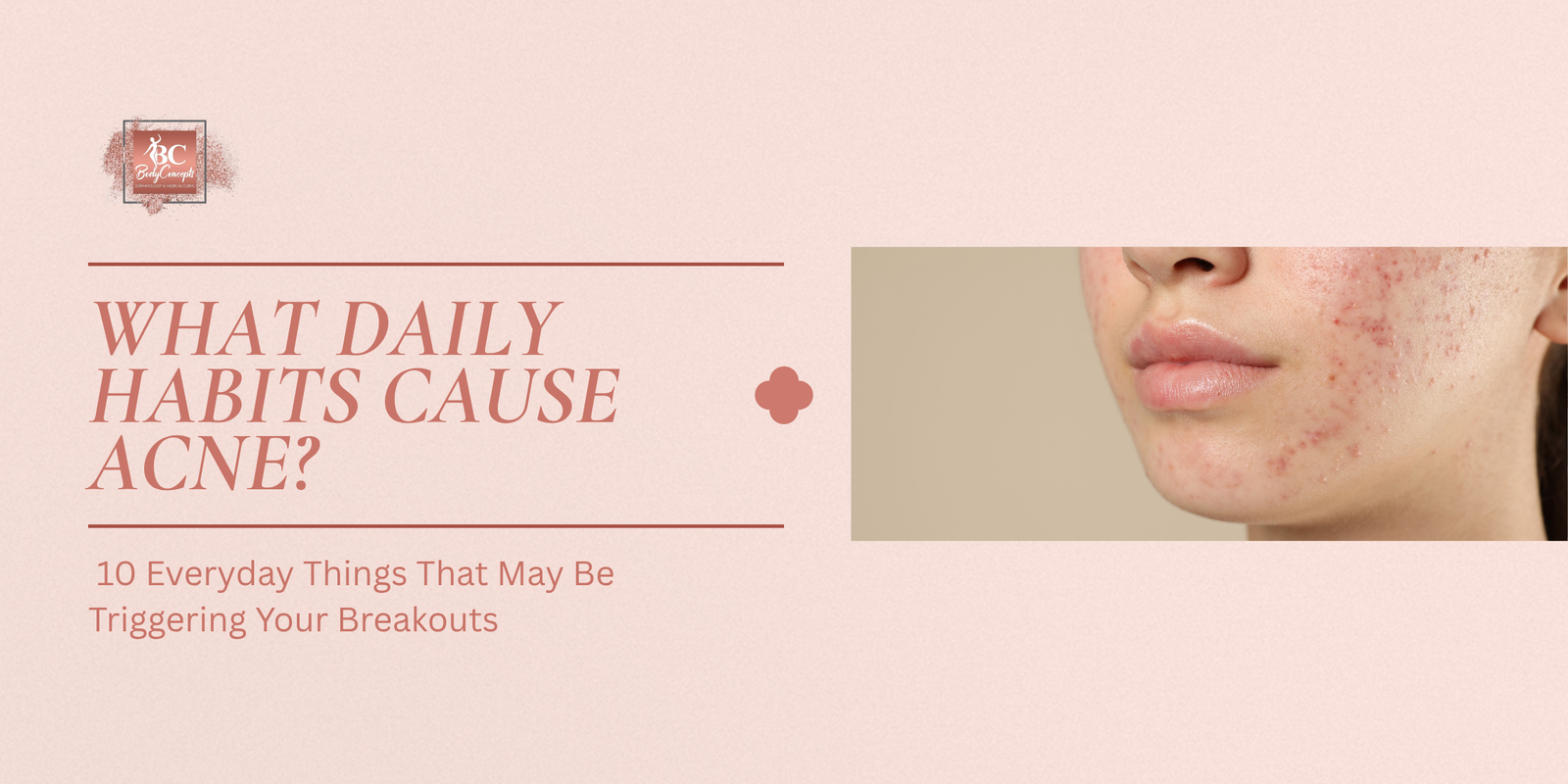
Acne can sometimes feel unpredictable. You may be following a skincare routine, using your favorite products, and still wondering why new breakouts keep appearing.
However, some everyday habits may be contributing to acne without you realizing it. From constantly touching your face to sleeping with makeup on, small routines can affect your skin over time.
While acne has many possible causes—including hormones, genetics, and excess oil—certain habits can irritate the skin, clog pores, or worsen existing breakouts.
So, before blaming your skincare products, take a closer look at your daily routine.
1. Constantly Touching Your Face
Do you rest your chin on your hand while working? Touch your forehead when you’re thinking? Or unconsciously pick at your skin throughout the day?
These simple habits can irritate acne-prone skin.
Your hands come into contact with countless surfaces throughout the day. As a result, repeatedly touching your face can transfer oil, dirt, and other substances to your skin. More importantly, picking or squeezing pimples can increase inflammation and raise the risk of scarring and dark spots.
Instead: Make a conscious effort to keep your hands away from your face, especially when you have active breakouts.
2. Washing Your Face Too Often
It may seem logical that washing your face more frequently will prevent acne. However, more cleansing doesn’t always mean clearer skin.
Washing your face repeatedly or using harsh cleansers can irritate the skin. Consequently, this irritation may make acne worse. Dermatologists generally recommend gently washing your face twice a day and after activities that make you sweat.
Instead: Use a gentle, non-abrasive cleanser and avoid aggressive scrubbing.
3. Scrubbing Your Skin Too Hard
When you notice oil, blackheads, or pimples, you might feel tempted to scrub harder.
But acne-prone skin needs gentleness, not punishment.
Harsh scrubbing can irritate the skin and trigger more inflammation. Therefore, a gentle cleansing routine is usually a better approach than trying to physically “scrub away” acne.
Instead: Cleanse with your fingertips using gentle circular motions, rinse with lukewarm water, and pat your skin dry.
4. Sleeping With Makeup On
After a long day, removing your makeup may be the last thing you want to do.
Nevertheless, skipping this step can be a problem for acne-prone skin.
Even makeup labeled non-comedogenic may contribute to breakouts if it remains on your skin overnight. The American Academy of Dermatology recommends removing makeup before going to bed and cleansing the skin afterward.
Instead: Make makeup removal part of your nightly routine—no matter how tired you are.
5. Using Products That Clog Your Pores
Not every skincare or beauty product is suitable for acne-prone skin.
For example, some makeup, moisturizers, sunscreens, and hair products may contain ingredients that contribute to clogged pores or breakouts. Therefore, choosing the right products matters.
Look for labels such as:
- Non-comedogenic
- Oil-free
- Won’t clog pores
- Non-acnegenic
These labels indicate that the product is formulated to be less likely to cause acne.
6. Letting Hair Products Touch Your Face
Your hair care routine could also be affecting your skin.
Shampoos, conditioners, pomades, gels, waxes, and other styling products may contain oils or ingredients that can contribute to clogged pores. As a result, tiny bumps may appear along the hairline, forehead, or back of the neck.
Instead: Keep hair products away from your face as much as possible and wash areas that come into contact with product residue.
7. Rubbing Sweat After Exercise
Exercise is great for your overall health—and you don’t need to stop working out because of acne.
However, how you handle sweat matters.
Roughly rubbing your face with a towel can irritate the skin. In addition, leaving sweat on the skin for too long may contribute to irritation and breakouts. Dermatologists recommend gently patting sweat away and cleansing after heavy sweating.
Instead: Use a clean towel, gently pat your skin, and wash your face or shower after strenuous activity.
8. Picking or Popping Pimples
That tempting pimple can be difficult to leave alone.
Still, popping it may create more problems than it solves.
Squeezing a pimple can push its contents deeper into the skin, increasing inflammation. Consequently, the breakout may become more noticeable and may take longer to heal. It can also increase the risk of acne scars and post-inflammatory dark spots.
Instead: Resist the urge to pick and allow appropriate acne treatment to do the work.
9. Changing Acne Products Too Quickly
When a new product doesn’t immediately clear your skin, it can be tempting to try another—and another.
However, constantly changing your routine may actually irritate your skin.
According to the American Academy of Dermatology, acne treatments often need several weeks before improvement becomes noticeable. Therefore, constantly switching products may make it harder to determine what works for your skin.
Instead: Give your skincare routine enough time to work, unless your dermatologist advises otherwise.
10. Ignoring Stress and Lack of Sleep
Finally, don’t overlook your lifestyle.
Stress does not directly cause acne, but it can worsen existing acne. Research also suggests that getting too little sleep may contribute to worsening acne.
Therefore, skincare isn’t the only part of your acne-management routine. Getting adequate rest, managing stress, staying active, and maintaining healthy daily habits can all be part of taking better care of your skin.
Small Habits, Better Skin
The good news is that you don’t necessarily need to completely overhaul your life to support healthier-looking skin.
Start with small, consistent changes.
✔ Avoid touching your face throughout the day
✔ Wash your face gently twice daily and after sweating
✔ Skip rough scrubbing that can irritate your skin
✔ Always remove makeup before going to sleep
✔ Use non-comedogenic products that won’t clog pores
✔ Keep greasy hair products away from your face
✔ Resist picking, popping, or squeezing your pimples
✔ Be patient and allow acne treatments time to work
✔ Reduce stress and make quality sleep a priority
Most importantly, remember that acne is not simply a result of having “dirty” skin. In fact, overly aggressive cleansing can make acne worse. Acne is a complex skin condition, and persistent or severe breakouts may require professional assessment and treatment.
If your acne continues despite consistent skincare, consult a board-certified dermatologist. The right diagnosis can help identify possible triggers and create a treatment plan suited to your skin.
Your Skin Deserves More Than a Quick Fix
At Body Concepts, we believe that skin health is an important part of feeling confident and cared for at every stage of your wellness journey.
Move. Protect. Care. Glow. ✨
Ready to give your skin the professional care it deserves?
Body Concepts Dermatology and Medical Clinic
📞 0922 816 3469
📍 Maharlika Highway, San Rafael, Bulacan